Deck Repair or Replace? Signs Your Georgia Deck Needs Work
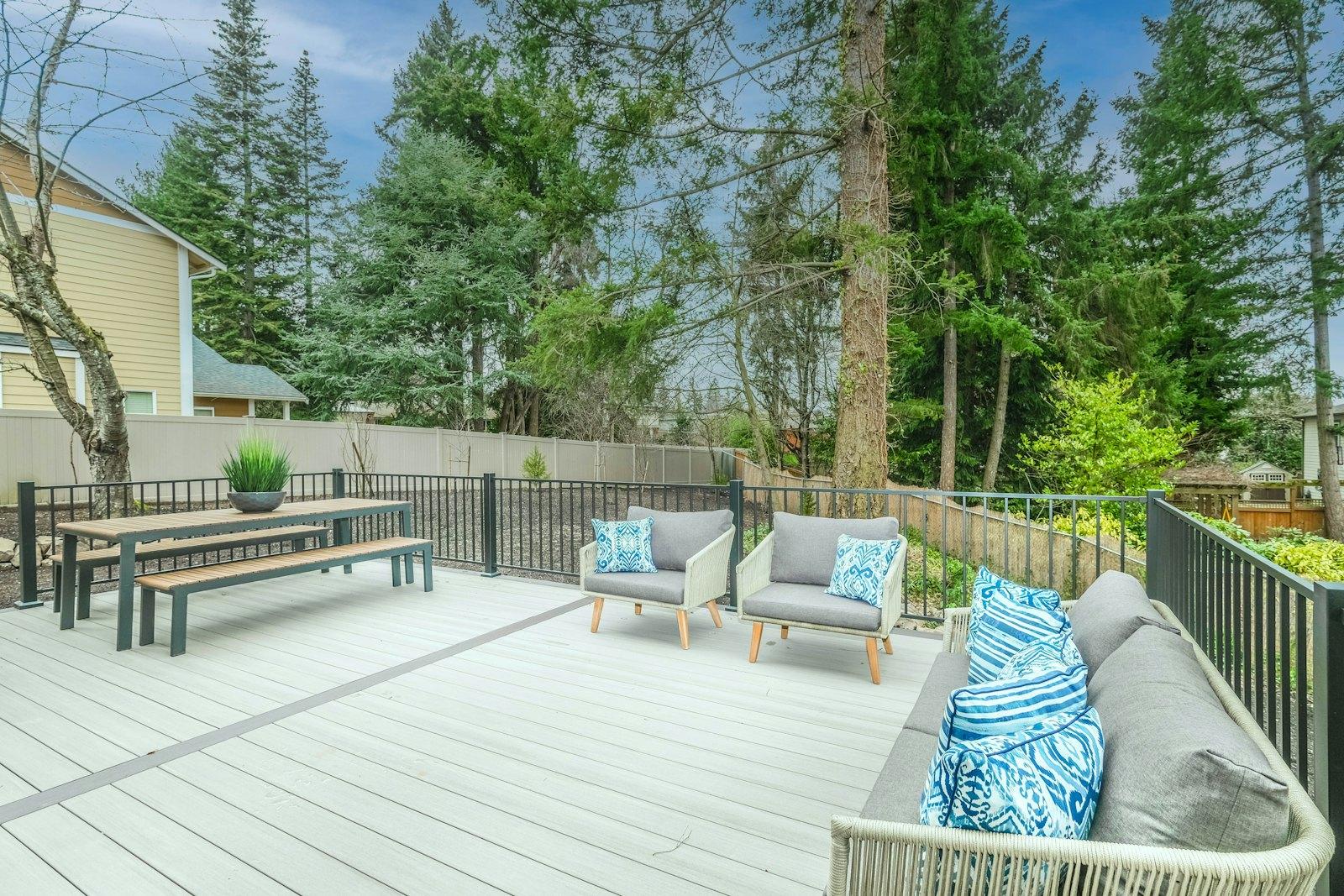
A deck usually needs repair when the damage is limited to a few boards or connections, and replacement when the frame underneath has failed. Georgia's heat, humidity, and heavy rain all take a toll on outdoor wood, so decks across South Atlanta, McDonough, and metro Atlanta tend to show wear faster than homeowners expect.
This guide covers what to look for and when to call someone before you use the deck again.
Stop Using an Unsafe Deck First
If you notice soft spots, visible rot, loose railings, or boards that flex more than they should, stop using that area of the deck right away. Safety comes before figuring out repair or replace.
Keep kids, pets, and heavy furniture off any section that feels unstable until it has been checked. A deck that fails under weight can cause a serious fall.
Check the Deck Boards Themselves
Walk the deck and press on boards with your foot, especially in spots that stay shaded or collect water. Soft, spongy wood, boards that are splitting along the grain, or boards with visible mold or discoloration are signs of rot.
If the problem is limited to a handful of boards and the frame underneath feels solid, board replacement is usually a straightforward repair. If most of the decking surface shows the same kind of damage, that points toward a bigger project.
Look at the Railings and Stairs
Railings take a lot of abuse from leaning, kids climbing, and general wear. Give the top rail a firm push. It should not wiggle or feel loose at the posts.
Stairs deserve the same check. Treads that flex, wobble, or feel uneven under your foot need attention soon, since stairs see concentrated weight with every step.
Inspect Where the Deck Meets the House
The ledger board, which connects the deck to your house, is one of the most important parts of the whole structure. Look for gaps between the ledger and the house, rust streaks around the bolts, or soft wood where the ledger attaches.
Problems here are more serious than a damaged deck board, since the ledger carries a large share of the deck's weight. This is an area where a careful inspection matters more than a quick glance.
Mid-article: if you are not sure whether what you are seeing is a simple fix or something bigger, call [GHL PHONE] or request a free quote and we can take a look.
Check the Posts and Footings
Posts that feel loose at the base, lean noticeably, or sit in wood that has started to rot near ground level are a sign the deck's support structure is wearing down. Footings that have shifted or cracked can also affect how level and stable the whole deck feels.
Surface Wear vs Structural Damage
Not every issue means a full rebuild. Faded, splintering wood on the surface, loose screws, or a board or two with minor cracking are usually surface-level problems that repair can fix. Cleaning and refinishing can also help extend the life of wood that is still structurally sound.
Structural damage is different. Widespread soft wood, a ledger pulling away from the house, or posts that have rotted through point toward replacement of the affected sections, or in more severe cases, the whole deck.
When a Full Rebuild Makes More Sense Than Patching
If the damage is spread across most of the deck, or if repairs would end up touching nearly every board and connection anyway, a full rebuild can be more practical than a series of patches. A rebuild also gives you the chance to address an outdated layout or add features you have wanted.
This decision depends on the specific deck, its age, and how widespread the damage is. A visit lets us give you a clear answer instead of a guess.
If your deck is showing any of these signs, do not wait until it gets worse. Call [GHL PHONE] or request a free quote and we will help you figure out the right next step.
Frequently asked questions
How do I know if my deck is safe to use right now?
Check for soft or spongy boards, loose railings, and any wobble in the posts or stairs. If anything feels unstable, stay off that section until it has been inspected. When in doubt, treat it as unsafe.
What causes deck boards to rot in Georgia?
Georgia's humidity, heavy rain, and heat all speed up wood decay, especially in shaded spots or areas where water pools instead of draining away. Wood that stays damp for long stretches breaks down faster than wood that dries out between rains.
Can a damaged deck board be replaced without redoing the whole deck?
Often, yes. If the frame underneath is solid and the damage is limited to a few boards, replacing just those boards is usually enough. We can confirm this once we see the deck in person.
How often should I check my deck for damage?
A visual check once or twice a year, especially after a harsh winter or a wet season, helps catch problems early. Press on boards in shaded or low-traffic areas, since those tend to show rot first.
Is a wobbly railing dangerous?
Yes. A loose railing may not hold weight if someone leans on it or falls against it. Treat a wobbly railing as a priority repair, not something to put off.
What is the ledger board and why does it matter?
The ledger board connects the deck to your house and carries a large share of the structure's weight. Gaps, rust, or soft wood at the ledger are a more serious sign than damage to a single deck board.
How do I get my deck checked out?
Call [GHL PHONE] or [request a free quote](/contact). We will look at the boards, railings, and overall condition and tell you honestly whether you are looking at a repair or something bigger.